
Introduction: Why Play Matters More Than You Think
When you think of learning, you might imagine desks, worksheets, and tests — but for kids, one of the most powerful tools for learning is actually play. Whether it’s building a blanket fort, role-playing as a shopkeeper, or experimenting with blocks, play gives children the freedom to explore, experiment, and problem-solve in ways that traditional instruction can’t always match. Research consistently shows that play is essential for brain development, emotional intelligence, and long-term academic success.
1. The Science Behind Play-Based Learning
From the moment they’re born, children learn by interacting with their environment. Play activates multiple areas of the brain, building neural connections that support memory, language, and critical thinking skills. Studies have found that children engaged in play-based learning show better cognitive flexibility, improved vocabulary, and stronger problem-solving skills compared to those in highly structured learning environments.
2. Emotional and Social Skills Built Through Play
Play isn’t just fun — it’s emotional training. Through games and imaginative scenarios, kids learn how to:
- Share and cooperate with peers
- Manage frustration when things don’t go as planned
- Express feelings in healthy ways
- Build empathy by taking on different roles
When kids “play house,” “run a store,” or “become superheroes,” they’re not just pretending — they’re practicing life skills they’ll carry into adulthood.
3. Physical Development Through Play
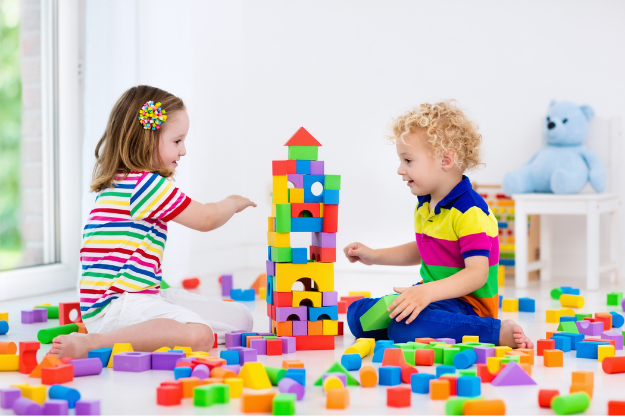
Active play — like climbing, running, or building — helps children develop coordination, balance, and motor skills. Even simple activities like stacking blocks or threading beads strengthen fine motor skills essential for writing and self-care.
4. How Parents Can Encourage Learning Through Play
The great thing about play is that it doesn’t require fancy toys or complicated setups. Here are a few ways to incorporate more learning through play at home:
- Create themed play spaces (e.g., a pretend restaurant, science lab, or post office)
- Mix in real-world math and literacy skills (counting pretend money, writing menus, labeling toy shelves)
- Join in the fun — your participation boosts engagement and builds connection
- Offer open-ended materials like blocks, cardboard boxes, and art supplies to spark creativity
5. The Long-Term Benefits of Play
Children who grow up in environments that value play are more likely to:
- Be confident problem-solvers
- Show resilience in the face of challenges
- Have strong social relationships
- Maintain a lifelong love of learning
By prioritizing play, you’re not “wasting time” — you’re laying the foundation for academic and life success.
Conclusion
In the fast-paced world of academic pressures, it’s easy to undervalue play — but the research is clear: children learn best when they’re having fun. By